Quiet Lines: Douglas’ Discovery
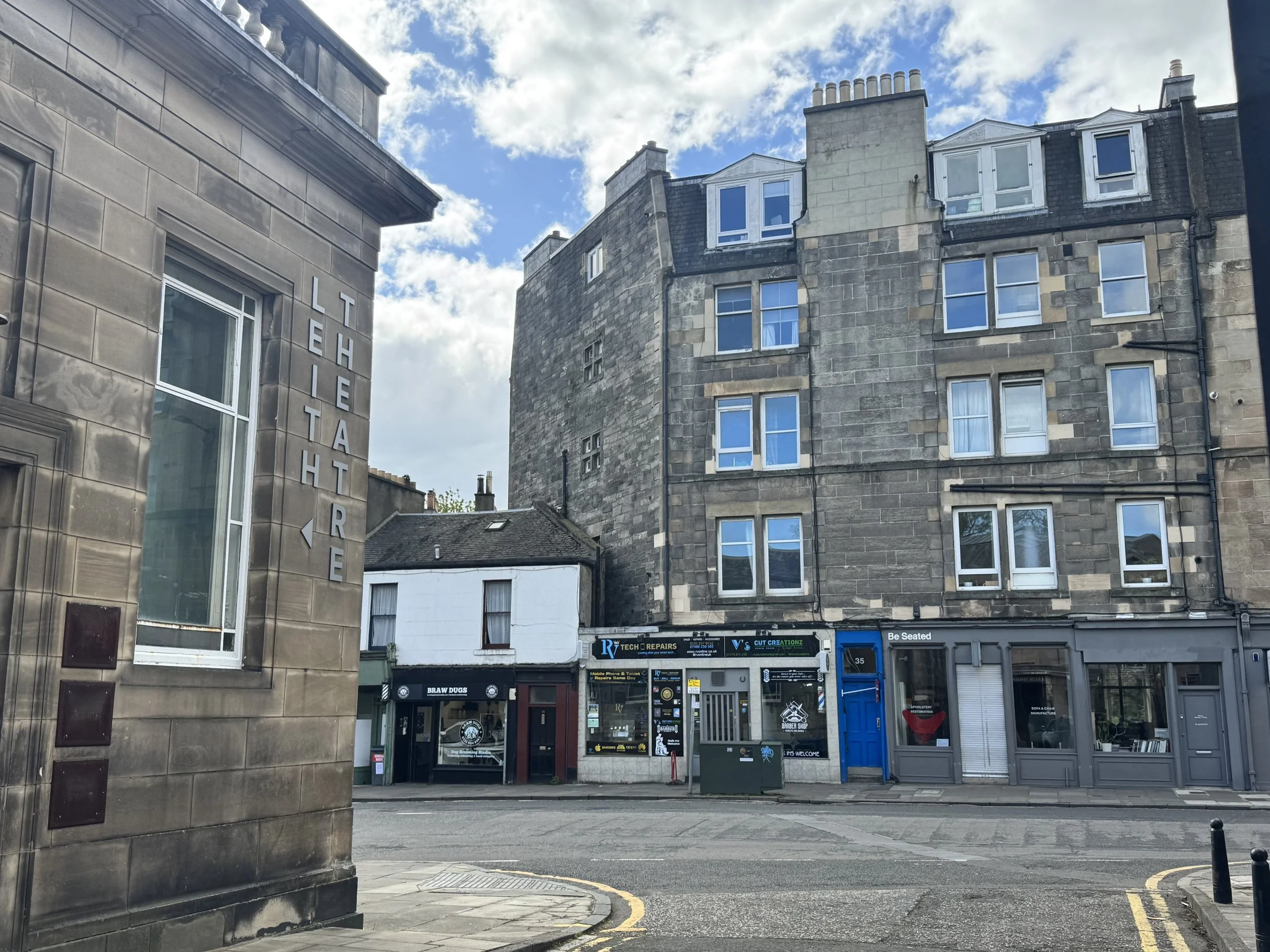
Ever wondered why the buildings opposite and beside Leith Theatre seem slightly off-angle? Douglas went down a rabbit hole so you don’t have to - and what he discovered is fascinating.
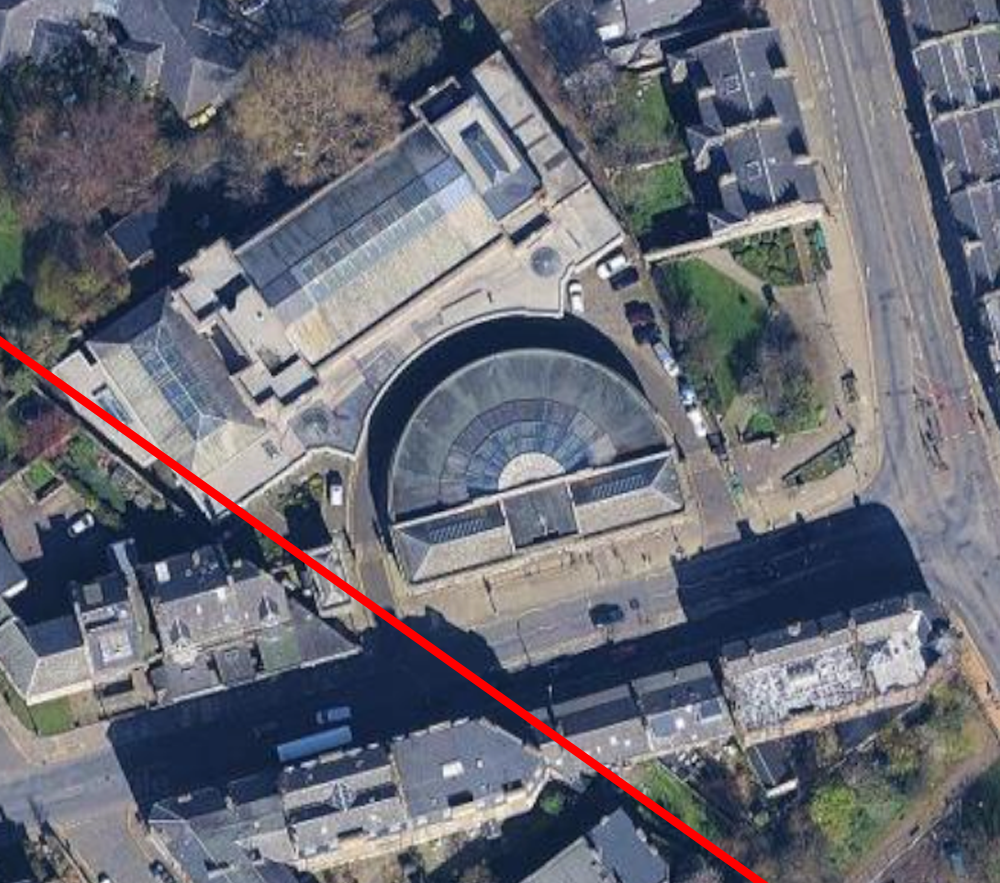
Image taken from Google Maps. The red line indicates the peculiar angle.
On the warmest day of the year so far, as the design team traversed the roof at high level working on a vision for the future of Leith Theatre, we got chatting to a neighbour (very much at ground level) about what Leith looked like 500 years ago.
You can see it from our little patch of Ferry Road, through the gates of the theatre, a strange line cutting through the buildings to the south of us. The edge of Alison Kinnaird’s glass workshop and the tenements by the bus stop don’t quite sit square. They appear to be sliced across the street by the same angle.
As it turns out, that line isn’t accidental and after chasing down a rabbit hole, we found out why.
In the mid 16th century Leith was enclosed by an early example of “trace italienne”, a system of bastioned fortifications designed around the advent of gunpowder to suit this new age. Instead of straight medieval walls these defences jutted outward in angular bastions to prevent blind spots, allowing every approach to be covered.
And as it turns out, Leith Theatre, the Caretakers Cottage and Leith Library sit right at the extremities of one of these fort edge defensive structures.
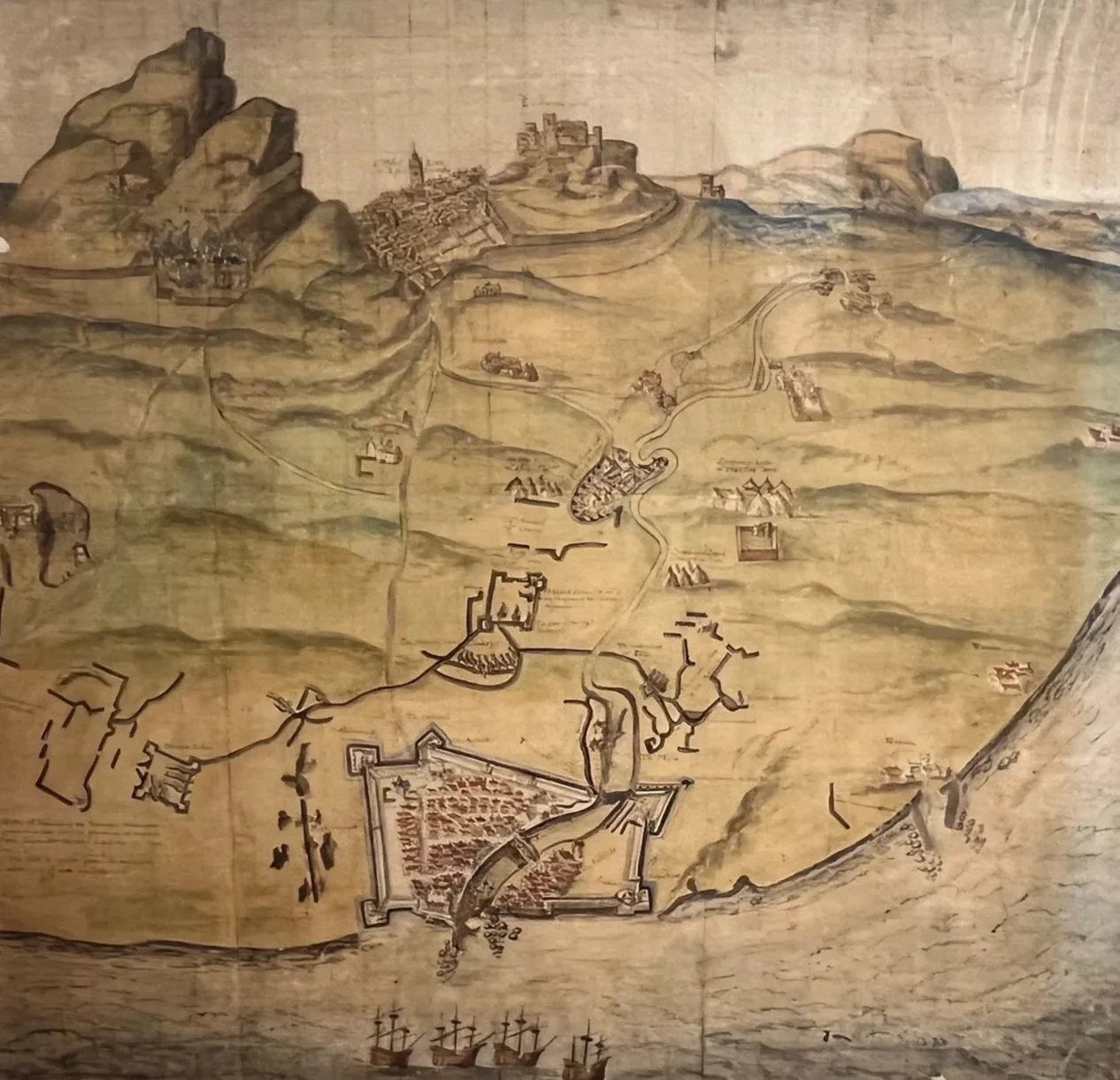
Image courtesy of North & South Leith Parish Church.
Where we now stand there would once have been an outcrop of earth and stone shaped for defence. Although the walls have been gone for centuries, their geometry has been passed down from building to building up to current day. The same odd angles persisting not as defences but as boundaries that have shaped Leither’s flats and businesses.
Further down the line, on our little piece of the once bastion, a manse took its place. Soldiers replaced by a minister, and the fortifications by a parish building. (There’s some storytelling liberty taken here, as between fort and manse were many years and quite likely other structures, but it sounds nice doesn’t it)
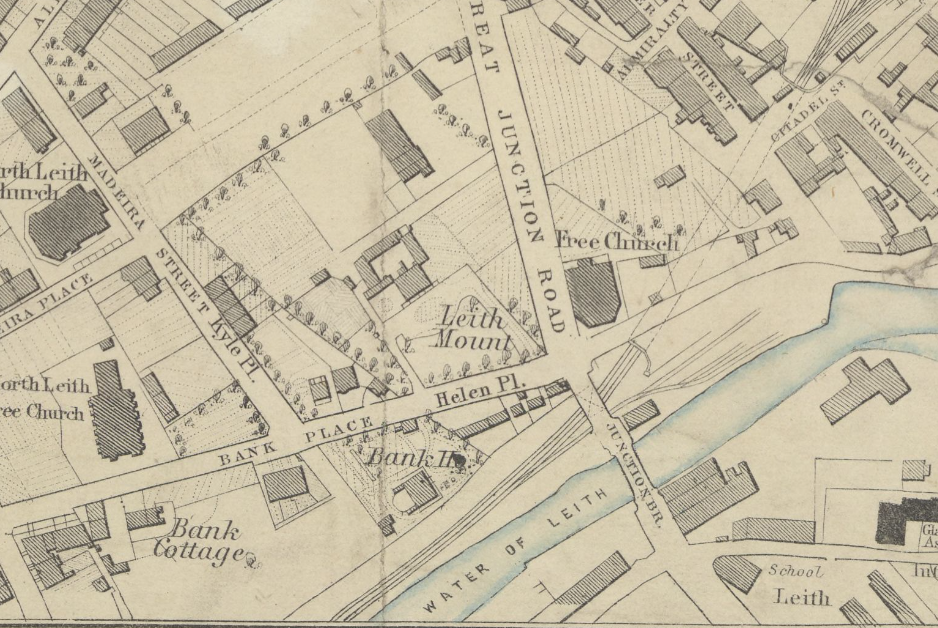
Reproduced with the permission of the National Library of Scotland - Map images - National Library of Scotland
At the edge of that setting sat a lodge where the caretaker’s cottage now stands. A smaller building but an important one. It marked the threshold between public and private space. Between the street and the manse grounds. A building that serviced another, replaced by the same again. Another layer added onto the same footprint shaped centuries earlier.
And alongside that the story shifts again. The presence of a poorhouse nearby points to a different kind of pressure on the area. Not military but social. These were places of shelter and also control revealing how the community responded to poverty and need.
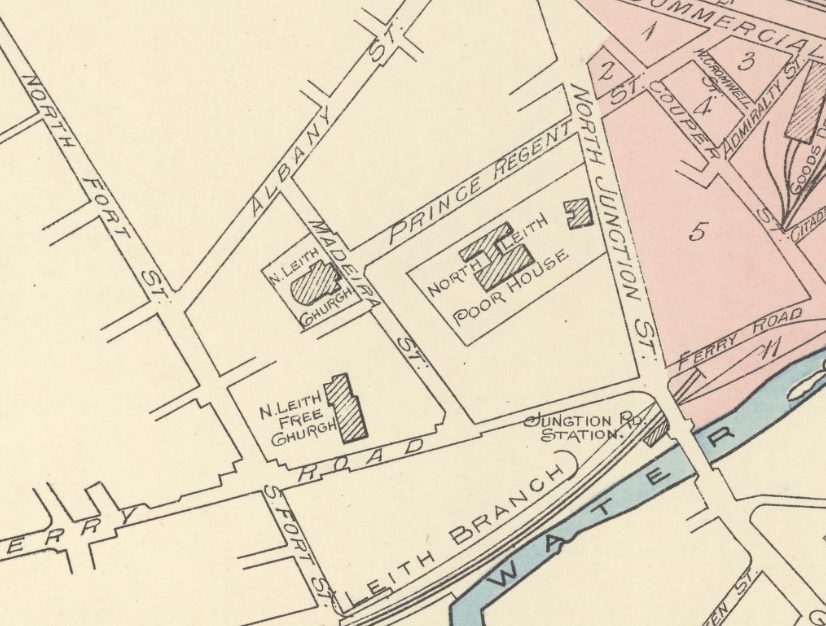
Reproduced with the permission of the National Library of Scotland - Map images - National Library of Scotland
The great walls were gone but their imprint remained, shaping how the land was divided and used.
And then much later Leith Theatre, although at the time known as Leith Town Hall. Not to defend or to oversee but to gather, celebrate, dance and listen. Hosting the community for entirely different reasons.
The angles are still there if you look for them. Quiet lines in brick and stone carrying the shape of something much older, and likely louder, for the time being at least.
Bastion into manse into theatre.
There’s a certain synergy in looking back on 28-30 Ferry Road’s history and what it once was, the space that the original architects chose for the complex and ultimately, the site that our own design team are surveying with the future in mind.
Since the building’s grand opening in 1932, the site's use hasn't changed for 94 years. It has survived a world war, many floods and a possible sale in 2004, all thanks to unfaltering local support.
The real goal of this project is to make sure that in another 94 years, when someone else is writing a similar blog, that the final chapter is still Leith Theatre, still standing and serving the community and beyond for years to come.
It’s worth mentioning that I’m no history expert, but do really enjoy diving into anything Leith or Leith Theatre related. One of the fantastic resources that I found myself in on this journey was Threadinburgh’s write up on the Siege of Leith. If you want to enjoy some of the finer details, please find the link below!
I would also like to extend my warmest thanks to Stephen McMahon and the North & South Leith Parish Church for allowing me to visit and capture their copy of the 1560 Siege of Leith Map and for taking the time to show me around and share some of their vast knowledge. I wholeheartedly recommend that anyone who is interested in their beautiful church or Leith history attends their next Doors Open Day in September. You won’t regret it!